
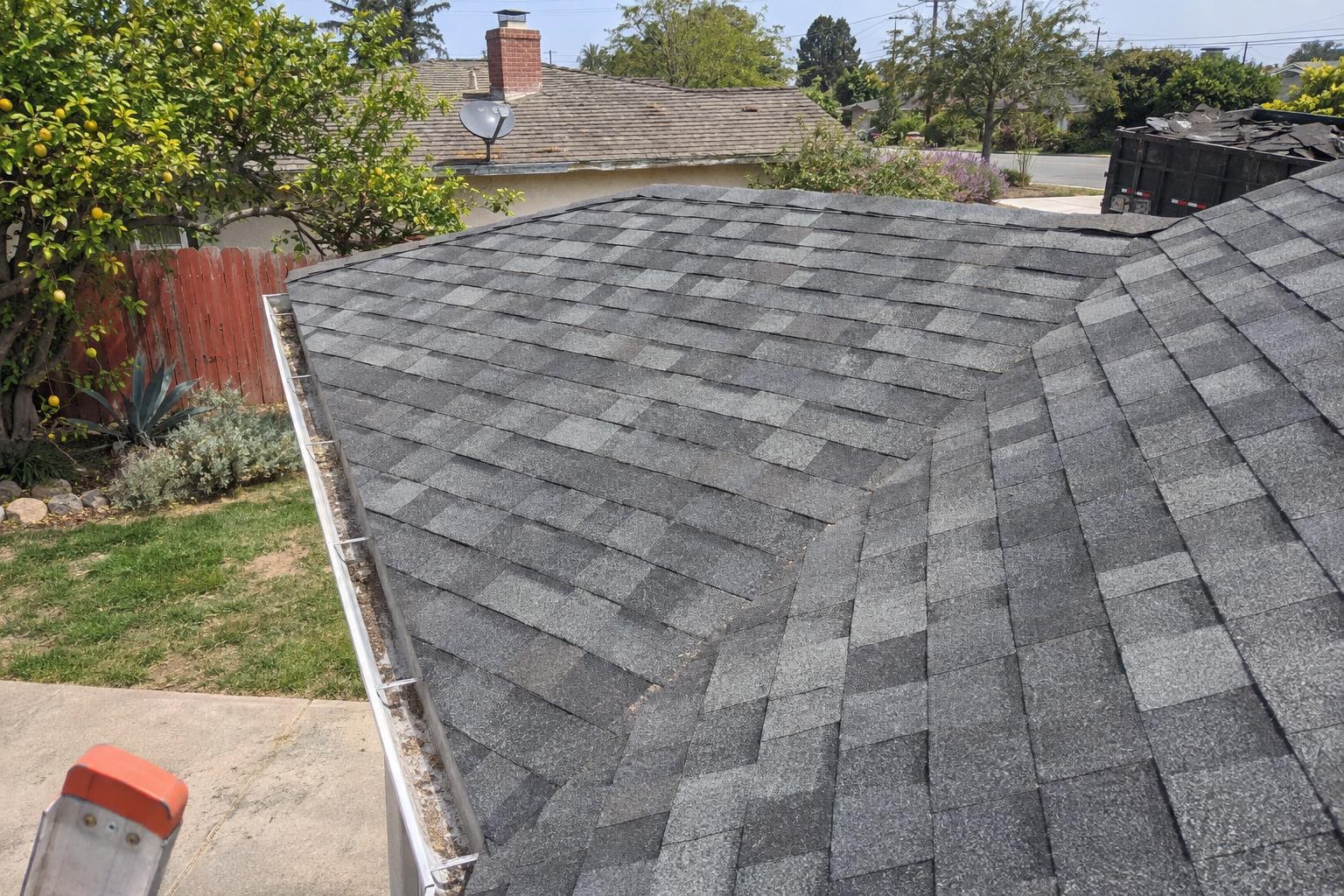
Most of the roofs in Diamond Bar went on in the 1970s and 80s, when the hillside tracts off Grand Avenue and Diamond Bar Boulevard were built out. A lot of those houses still have their original concrete or clay S-tile, sometimes over a second or even third layer of felt that nobody ever pulled off. That matters when you're hiring someone, because a contractor who's worked this area knows what's usually underneath those tiles and what shape the decking is probably in after forty-plus years of summer heat and winter rain. Someone who's mostly done new-build subdivisions in the Inland Empire may not.
Check the license before you check anything else
In California, roofing work requires a C-39 contractor's license, and you can look it up yourself on the CSLB website in under a minute. Check that it's active, check the bond amount, and check that workers' comp insurance is current, not expired six months ago with a renewal "in process." If a crew shows up to tear off your roof and someone falls off a ladder without coverage, that liability can land on you as the homeowner. Ask for the license number up front. A contractor who's annoyed by the question is telling you something.
What a real inspection actually covers
A lot of "free inspections" are a five-minute walk on the roof followed by a quote for full replacement. A real one takes closer to 30 to 45 minutes and covers more than what you can see from the ground. That means checking the flashing around every penetration, pipe boots, skylights, chimney, valleys, and the step flashing where the roof meets a wall. It means pulling a tile or two to look at the underlayment underneath, not just eyeballing the surface. Concrete tile itself can last 50 years, but the felt or synthetic underlayment doing the actual waterproofing underneath it usually doesn't, especially once it's baked through enough Diamond Bar summers where attic temperatures regularly hit 140 degrees. If a roofer never mentions the underlayment, they didn't really look.
Ventilation gets skipped a lot, too. Original builder-grade attic vents in these tract homes are often undersized for the roof area, which means heat and moisture get trapped, shingles and tile fasteners degrade faster, and in some cases you get dry rot in the rafters before anyone notices a drip inside the house. A contractor who mentions intake and exhaust balance, not just "we'll patch the leak," is thinking about why the roof failed, not just where.
Why the lowest bid usually isn't the lowest cost
On a typical 20 to 25 square re-roof (a square is 100 square feet), the spread between bids often comes down to what's not written on the page. Is it 30-lb felt or a synthetic underlayment rated for higher wind uplift? Is the crew doing a full tear-off down to the decking, or overlaying on top of what's there, which hides rot and voids most manufacturer warranties? Are they replacing deteriorated decking as a line item, or is that going to show up as a change order once they've already torn the roof open and you're not in a position to say no? A contract that says "replace roof" with a number and nothing else is not a bid, it's a placeholder.
Santa Ana wind events in fall, when gusts through the passes around Tonner Canyon and Diamond Bar can run 50 mph or more, are what actually tests a roofing job. That's when loose flashing, under-nailed shingles, and improperly bedded ridge tile show their weaknesses. A roof that looked fine in June can lose a section of ridge cap in a October wind event if it wasn't mortared or clipped correctly.
Permits, HOAs, and the paperwork side
Diamond Bar is unincorporated in parts and incorporated in others, and most roofing permits in the city get pulled through the Building and Safety division, with inspections tied to the scope of work, usually a deck inspection once the old roofing is off and before the new material goes down, and a final once it's complete. Any legitimate contractor pulls that permit themselves, under their own license, not under yours. If someone tells you the permit is "optional" or that it'll "slow things down," that's a sign to keep looking, because an unpermitted re-roof can become your problem at resale.
Diamond Bar also has a lot of active HOAs, especially in the newer developments like The Country Estates and some of the planned communities off Pathfinder and Brea Canyon. Many of those have architectural guidelines about tile profile, color, and sometimes even manufacturer. Before you sign anything, check whether your HOA requires approval of the roofing material and color, because redoing a roof in the wrong tile can mean doing it twice.
Signs to walk away from
- Anyone who wants full payment up front, before material is even delivered. A deposit is normal. The full contract price in advance is not.
- A contractor who showed up uninvited after a windstorm, offering to "check your roof for storm damage" for free. Some of these are fine, but a lot of them are working off a list of addresses, not local knowledge of your neighborhood.
- No written scope of work, just a one-line quote. You want square footage, material brand and type, underlayment spec, flashing details, and disposal of the old roofing all spelled out.
- Pressure to sign the same day because the price is "only good today." A roof is not an impulse purchase.
None of this is complicated once you know what to look for, but it's easy to miss if you've never hired a roofer before and you're going on price and a friendly voice on the phone. Ask for the license number, ask what's under the tile, ask who pulls the permit, and get the scope in writing before anyone touches a shingle. If you want someone to walk your roof and tell you honestly what shape it's in, that's the kind of inspection Everpeak Roofing Solutions does before any talk of a quote.